
Any item on a public meeting agenda can fill the chamber, and councils rarely get much warning. The residents who cannot get in, or who leave before their item is called, are the ones most likely to conclude the decision was made without them. Treating reach as part of meeting readiness, the way you already treat the sound system, means a surge costs you nothing extra on the night.
A contract renewal sits on the consent calendar. It has gone through twice before without a word. Then someone posts about it in a neighborhood group on Thursday, and by Tuesday the chamber is full forty minutes before the gavel. The lobby fills. Staff start turning people away at the door. Public comment runs past ten, and by the time the item comes up, a good share of the people who signed up have gone home to relieve a sitter or make a shift.
The council votes. The decision may well be the right one. But a few hundred residents formed their view of how it was made from a hallway, a parking lot, or nothing at all.
City council meeting overflow looks like a facilities problem. It behaves like a communications one.
The crowd is the constant, whichever way the vote goes
License plate reader contracts have been this year's clearest example. The National Association of Counties reports that counties across the country are reassessing the technology amid public pressure, with some expanding their camera networks and others pulling them out.
What is worth noticing is not where any of these councils landed. It is that the room filled either way.
Four councils, 2026
Residents raised concerns at the February and March meetings. The council voted unanimously to renew in April, and dozens of attendees chanted "shame" after the vote.
Public comment on August 18 drew opposition from residents across the political spectrum. The council voted a week later not to renew.
The council passed a resolution unanimously, then held an hour and a half of public comment after the vote had already been taken.
The county board voted unanimously to ban the technology from county parks, taking down 42 cameras.
Sources: Rough Draft Atlanta, WBOI, FOX 9, CBS 58, NACo.
Four councils, four different conclusions, and the same scene in each chamber. Swap license plate readers for a rezoning, a school boundary, a water rate, a short-term rental ordinance or a police budget line, and the pattern holds. The item that packs your room next spring is probably already on a calendar somewhere, sitting under a heading that looks routine.
St. Paul is the one worth sitting with. The council had already passed its resolution, unanimously, and residents stayed for another ninety minutes to speak anyway. People do not do that because they expect to change a vote that has happened. They do it because being heard on the record is its own reason to show up.
Two of those cities also show something easy to miss. Dunwoody heard resident concerns at its February and March meetings before the April vote. Fort Wayne had a full public comment period a week before its council voted. The first surge arrives with little warning. The second and third do not, and most cities still run the follow-up meetings the same way they ran the first one.
The people who could not get in are the ones you most need to reach
A packed chamber is a sign of civic interest, which is the thing most communications teams spend the rest of the year trying to create. The trouble is that a full room is also a closed one.
Think about who is missing on a night like that. Residents who work evenings or overnight shifts. Parents and caregivers who cannot leave the house at 6 p.m. People who live on the far side of the county and will not drive forty minutes on the chance of getting a seat. Residents with mobility limits, for whom a standing-room-only lobby is not an option at all. And everyone who showed up, waited three hours, and left before their item was called.
Those residents will still hear what the council decided. A neighbor will tell them, or they will read the headline. What they will not have is any sense of how it was decided, who spoke, what the council asked, or whether anyone raised the thing they were worried about. They are left with an outcome and no proceedings, which is the condition under which people conclude that the outcome was arranged in advance. That gap is where trust goes.
Richfield, Minnesota shows how narrow the gap can be. The city held a work session on license plate readers before it bought the system. Residents came to an August council meeting anyway and told the council they should have had more say in the decision. The city had followed its process. The process had not reached them.
Running a lawful, well-noticed meeting is one job. Running a meeting your residents can follow from wherever they happen to be is another. Most cities are staffed and budgeted for the first, and then judged on the second.
A surge-ready checklist
The goal is to make a high-turnout meeting require no special preparation, because you will not reliably know which meeting it is. Every item below is something you can set up once and leave running.
Before your next agenda goes out
The surge-ready checklist
Scan upcoming agendas for renewals, rezonings and budget items that have drawn comment in neighboring jurisdictions.
Stream every meeting to every channel by default, so a surge needs no special setup on the night.
Keep an overflow room ready fed by the same stream, and say so in the meeting notice.
Post the stream link where the item is being discussed: your social pages, neighborhood groups and the agenda page itself.
Publish a timestamped recording so residents can jump straight to the item they care about.
Offer remote or written public comment where your state's open meeting law allows, and explain how.
Clip the discussion and the vote the next morning, for the residents who missed it.
Most of this is not new work so much as work moved earlier. A city that streams every meeting to every channel by default has already solved its overflow problem before the overflow happens. A city that scrambles to set up a stream on the afternoon of a packed meeting is making its most-watched broadcast of the year its least rehearsed one.
One note on the overflow room, because it is the item teams skip. A second room fed by the same stream costs almost nothing when the stream already exists, and saying so in the meeting notice changes who decides to come. A resident who knows there is somewhere to sit is a resident who shows up.
If you are not sure how many residents your meetings currently reach, that is worth establishing before a surge forces the question. We walked through how to measure it in a 20 minute cross-platform reach audit.
Reach belongs in meeting readiness
Nobody checks whether the microphones work only on the nights they expect a crowd. The sound system is part of being ready to hold a meeting at all, and reach deserves the same standing.
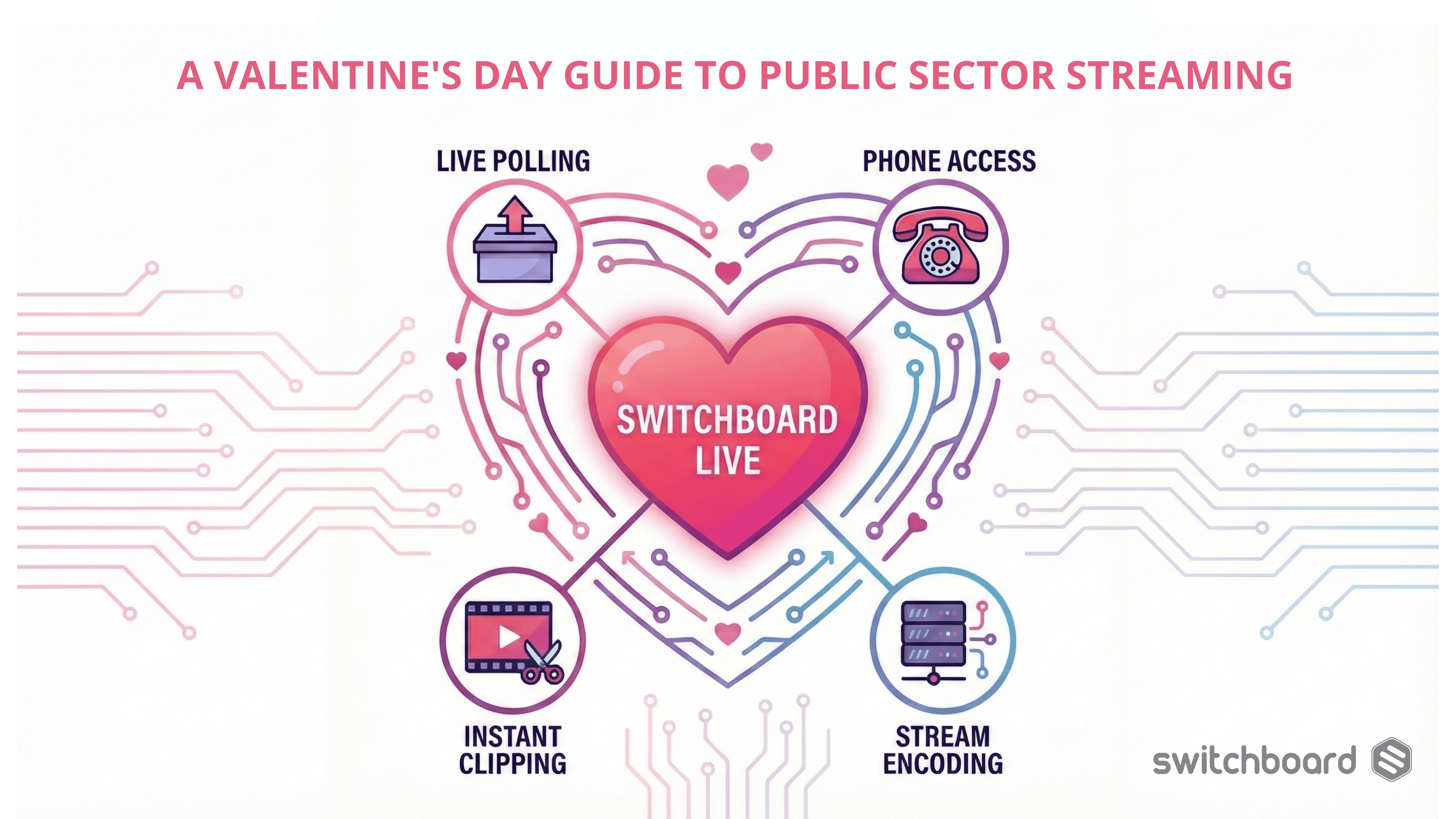
Switchboard Live takes the feed your AV setup already produces and sends it to YouTube, Facebook, your municipal site, your PEG channel and an overflow room at the same time, without new hardware and without your communications staff learning a new console on the night it matters. When the quiet agenda item turns out to be the loud one, nothing about your setup has to change.
You will not know which meeting is the big one until the lobby fills. Set reach up once, and every meeting is ready for the night it turns out to matter.
Make sure your next packed meeting reaches every residentFrequently Asked Questions
What is city council meeting overflow?
Overflow is what happens when more residents attend a public meeting than the chamber holds. People wait in lobbies and hallways, are turned away at the door, or leave before the item they came for is called. It is most common on contract renewals, rezonings, budget items and anything that has drawn attention on social media in the days before the meeting.
How can a city prepare for a high-turnout council meeting?
The reliable approach is to make every meeting work as though it will be a high-turnout one. Stream to every channel residents use by default, keep an overflow room ready that is fed by the same stream, publish the stream link wherever the item is being discussed, and post a recording residents can navigate afterward. A surge then needs no special setup.
Does streaming a meeting reduce in-person attendance?
Cities that stream consistently generally find the opposite. Residents who can follow a meeting remotely tend to be better informed about what is on the agenda, and they turn up in person for the items they care about most. Streaming also gives a record to the residents who could not attend, which is the group least likely to feel included in the outcome.
Can residents give public comment remotely?
This depends on your state's open meeting law. Some states require remote participants to have the same real-time opportunity to comment as those in the room, others permit written comment only, and others leave it to the agency. Check your own statute and confirm with counsel before publishing a remote comment process.
What should a city do with the recording after a packed meeting?
Publish it quickly and make it navigable. A timestamped agenda or chapter list lets a resident jump straight to the item they care about rather than scrubbing through four hours of video. Clipping the discussion and the vote for the item that drew the crowd is the single most useful thing a communications team can post the next morning.