If the stream starts on time, the audio is clear, and the agenda is visible, it's tempting to call the livestream a success. Technically, it may be.
But there's a second question every city manager should ask: did residents have a realistic chance of finding it?
That's where many public-sector livestream strategies fall short. The most common mistake isn't bad video, poor lighting, or the wrong encoder. It's assuming that once a meeting is live, the job is finished.
Are Production and Distribution the Same Job?
They're not, and treating them as one is where the mistake happens. Production answers one question: can we broadcast this meeting reliably? Distribution answers a different one: can people actually encounter it?
A city can execute the first perfectly and still create real friction around the second. Residents may have to remember that a meeting is happening, visit the city website, find the meeting page, locate the player, and click into the broadcast. Every extra step in that chain asks more of the resident, and every extra step loses a few more of them.
That matters more now because local information habits have shifted. Pew Research Center's December 2025 data found that 40% of U.S. adults often or sometimes get local news and information directly from local government agencies or officials, up from 30% in 2018. Over half get local information from online forums or discussion groups, like community Facebook groups or Nextdoor. ICMA has made a similar point to local government leaders directly: social platforms are increasingly where residents encounter local information, and effective communication means showing up where people already are.
Why Should City Managers Care About This Beyond Communications?
Because it isn't only a communications-team problem, it's a service-delivery question. City managers spend real effort making government more accessible and responsive. That same thinking should apply to public information. A council meeting, a public hearing, a budget presentation, or an emergency briefing has limited reach if access depends on residents finding one specific webpage at one specific time.
None of this means replacing the municipal website, the public records archive, or the official meeting page. Those still matter, and they still need to. It means adding a distribution layer on top of them.
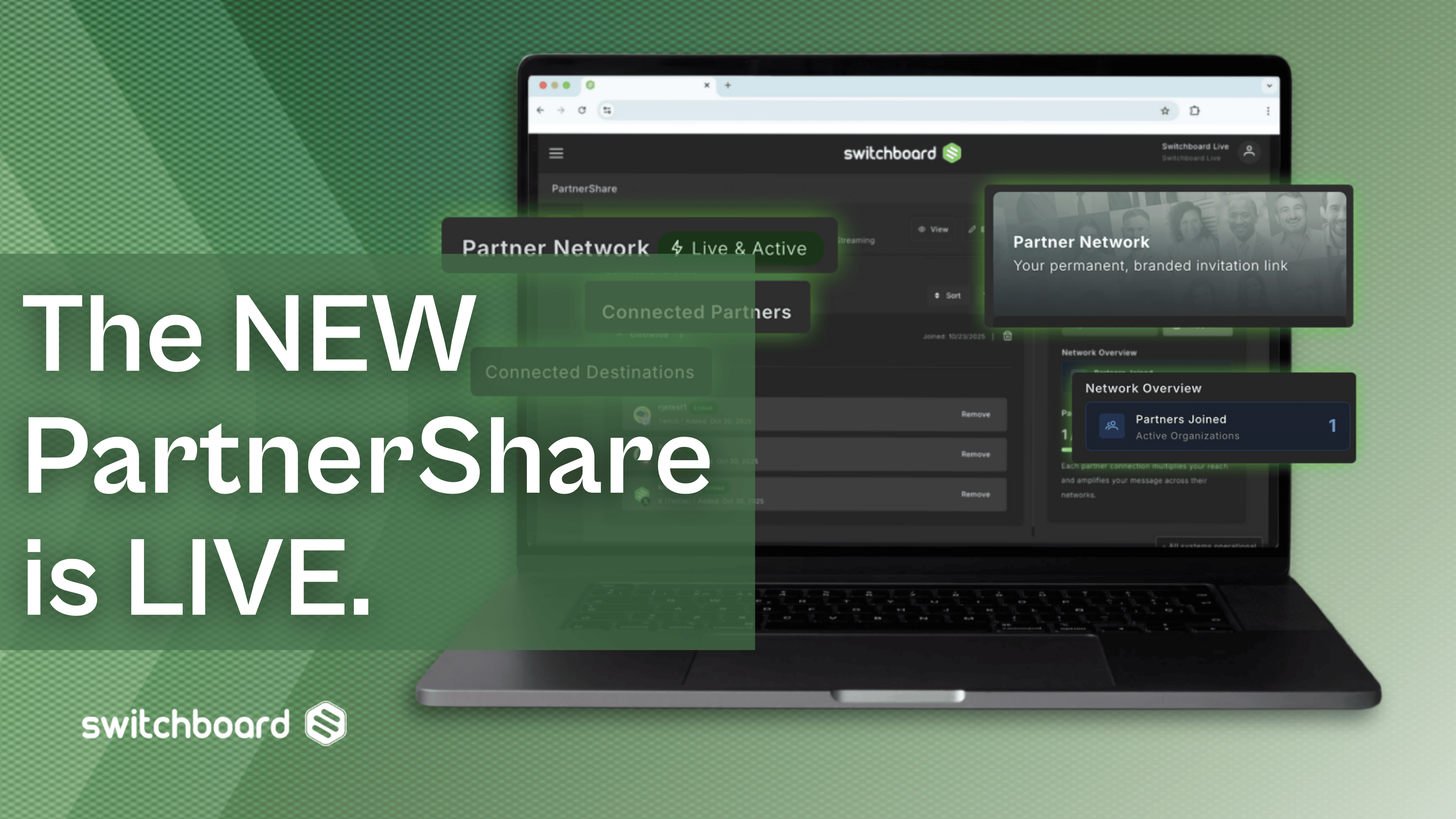
Multistreaming lets a city take one live broadcast and make it available across multiple destinations at the same time: the city website, YouTube, Facebook, or whatever channels fit the community. Switchboard Live handles that layer directly, taking a single feed and publishing it everywhere residents already spend their time, rather than asking staff to manage separate uploads to each platform by hand.
We explored the broader version of this argument in Building the Connected City: How Multistreaming and Civic Tech Drive True Engagement, and looked at the trust angle specifically in How Live Streaming City Council Meetings Can Foster Transparency and Trust.
What Does It Really Mean for a Meeting to Be "Live"?
For city leaders, the goal shouldn't be simply to broadcast. It should be to shrink the distance between important public information and the people who need it. Before your next livestream, three questions are worth asking:
Going live is a production milestone. Reaching people is the outcome that was supposed to follow it.
Frequently Asked Questions
What is the biggest mistake cities make with livestreaming?Treating the livestream itself as the end goal. A successful strategy also builds in intentional distribution, so residents can find the broadcast without having to go looking for it.
Should cities livestream meetings on social media?Social platforms can complement a city website and official archive by putting public information where residents already spend time. The right mix depends on the city's audience, policies, accessibility needs, and records requirements.
What is multistreaming for local government?Multistreaming sends one live video feed to multiple destinations at once, such as a municipal website, YouTube, Facebook, and other approved channels, without requiring separate uploads to each one.
Why does livestream distribution matter for city managers specifically?Because communication is part of service delivery. Reducing the friction around public information makes meetings and updates easier for residents to access, without creating an entirely new event for staff to produce every time.