The January swearing-in is the one meeting of the year with an audience that has never watched before, and most of that audience will look for it somewhere other than your website. Before the oath, confirm every channel link, update the names and graphics, assign a primary and a backup operator, plan the oath clip, and review who still has publishing access from the outgoing term.
In January, somebody who has never watched a county board meeting is going to go looking for one.
Someone they voted for is being sworn in. A neighbor, a former teacher, a name they recognize from a yard sign. They will search the county, land on whatever comes up first, and decide in about ten seconds whether this is a government that is easy to follow.
That audience arrives once a term. It is bigger than your regular one, and it is made up almost entirely of people who have no idea where you normally stream.
The meeting itself will be fine. Clerks run meetings. What tends to go unexamined is everything around the meeting: the links, the labels, the logins and the names on the dais.
Why the first meeting is worth preparing for
Swearing-in ceremonies pull in families, neighbors, local reporters and residents who are curious about who they just elected. Counties already treat them as video moments, and the good ones treat the announcement as part of the event. Somerset County, New Jersey put out a media advisory two weeks before its January 2025 reorganization meeting, telling residents exactly where the livestream would be and noting that seating in the room was limited.
That second detail matters more than it looks. A resident deciding whether to drive over is doing math in their head, and "seating is limited, here is the stream" answers the question before they ask it.
The audience for that answer is not on your website.
Where U.S. adults get local political news
Share who get it from each source at least sometimes.
Source: Pew Research Center, Consumption and Sources of Local Political News, July 2024.
Among adults aged 18 to 29, 71% get local political news on social media often or sometimes. The people most likely to turn up for a swearing-in are the people least likely to start at the county's homepage.
So the useful question for January is not whether you will stream the meeting. It is whether everything around the stream is ready for an audience that has never looked for it before.
A five-part checklist before the oath
Before January
The five-part transition checklist
Confirm your channel lineup. Open every link, then schedule the year's recurring meetings.
Update names, titles and graphics. Seat labels, channel banners, and a consistent video title format.
Name an operator and a backup. Both practiced, with a test run before meeting day.
Plan the oath clip. Cut it the same day, post it to official channels with names and districts.
Hand over access, not passwords. Review who can still publish, and remove anyone who shouldn't.
1. Confirm your channel lineup
List every place residents watch: YouTube, Facebook, the county website, the government access channel. Open each link and check that it still resolves. Then schedule the new year's recurring meetings now, so a resident who arrives early finds a calendar instead of an empty page.
2. Update names, titles and graphics
New members need new name graphics and seat labels. Channel banners and "about" sections that list the board need the same pass. Settle on a consistent video title, something like "Board of Commissioners Regular Meeting, January 13, 2027," so residents can find it again in six months when it matters.
3. Decide who runs the livestream, and who backs them up
Transitions reshuffle staff as well as elected officials. Name the person who starts the stream, the person who watches it, and a backup who has practiced both jobs. Do a test run in the chamber with the new seating chart before meeting day, not on it.
4. Plan the oath clip
The swearing-in is the most shareable minute of your year. Clip it the same day and post it to the county's official channels with each member's name and district. Keep it on official accounts. Whether members repost it to personal or campaign pages is a question for your social media policy and your records rules, and it is worth answering before somebody asks.
5. Hand over access, not passwords
Departing members and staff may still hold logins to county pages and streaming tools. Before January, review who can publish to each channel and remove anyone who no longer needs it. Review access by person rather than by shared credential, so the next transition does not turn into a password change that everyone has to be told about.
Make the reset stick
A new term sets habits that last two to four years, so it is worth spending an hour on the parts that outlive the January meeting.
Put the livestream links in the new members' onboarding packet, where they will find them when a constituent asks where to watch. Add the channel list to the clerk's written procedures. The goal is for the next transition to start from a document rather than from whoever happens to remember.
Scheduling the year's recurring meetings in advance does the same work. It turns the calendar into something residents can look at, and it means nobody is setting up a stream on the morning of a meeting that already has an audience waiting.
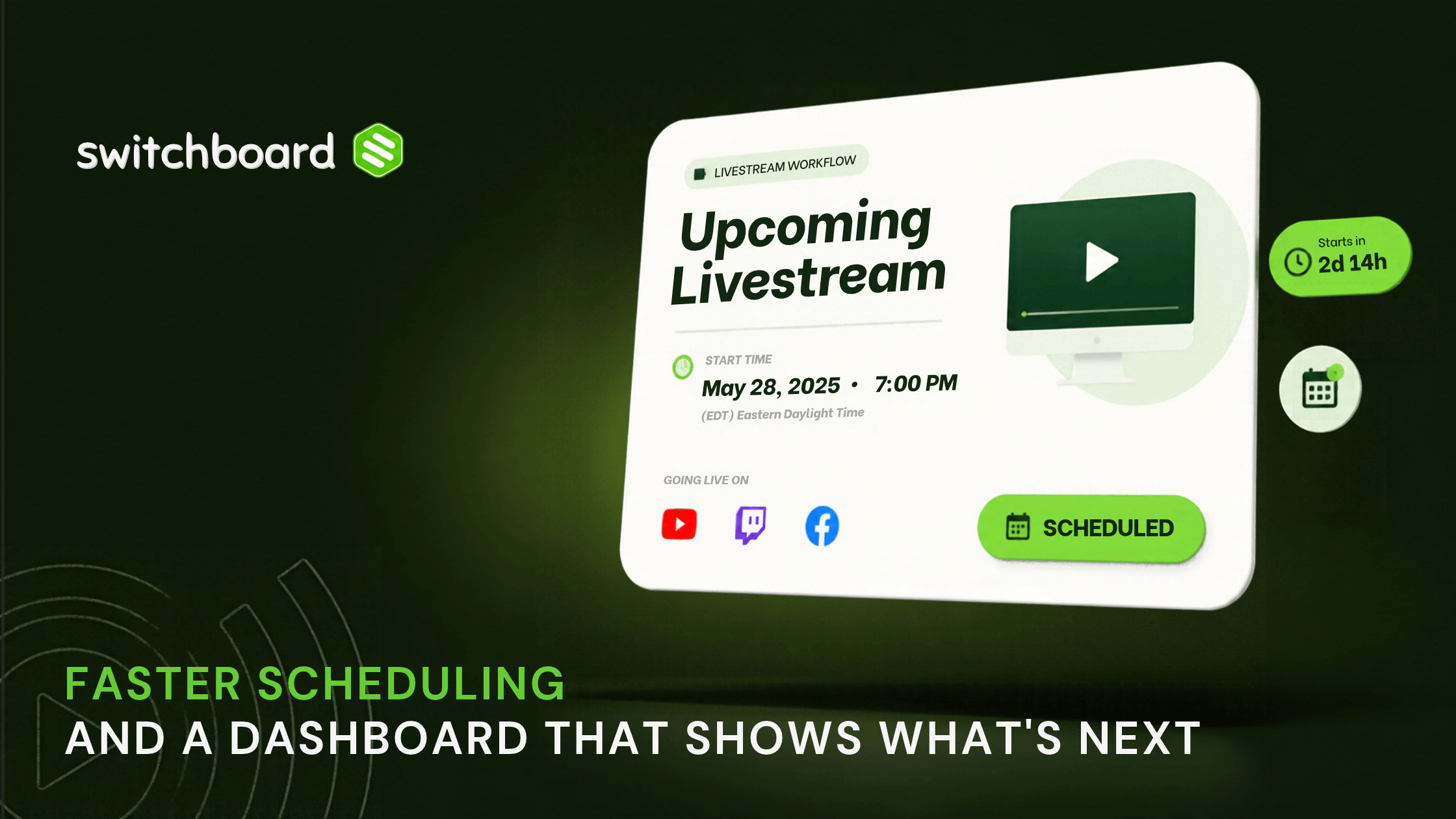
Switchboard Live sends one feed from the chamber to YouTube, Facebook, your website and your other destinations at once, through direct connections to the major platforms. Scheduled Events let you set the year's recurring meetings up ahead of time, so January's calendar is ready before the new board is.
Set the year's recurring meetings up once, in December, and January's calendar is ready before the new board is.
See how Scheduled Events workFrequently Asked Questions
When do newly elected county officials take office?
Most county officials elected in a November general election begin their terms in early January, often at a reorganization or organizational meeting where the oath is administered and the board selects its chair or director for the year. Exact dates vary by state and by county charter, so check your own statute and your board's rules.
Should a county livestream its swearing-in ceremony?
Many do, and it is one of the easier wins in the civic calendar. The ceremony draws families, local reporters and residents who do not normally watch meetings, which makes it the broadcast most likely to reach someone for the first time. Announcing where the stream will be, several days ahead, is as important as running it.
What should a clerk check before the new board's first meeting?
Confirm that every channel link still works, update name graphics and seat labels, schedule the year's recurring meetings, assign a primary and backup operator for the stream, and review who still has publishing access to county channels. A test run in the chamber with the new seating chart catches most of what is left.
How should counties handle channel access during a transition?
Review access by person, not by password. Departing officials and staff often retain logins to social accounts and streaming tools long after they leave. Remove accounts that no longer need access, and use tools that grant access by individual rather than by shared credential, so the next transition does not require changing a password everyone knows.
Why does the video title of a meeting matter?
Because residents search for meetings long after they happen. A consistent, descriptive title that includes the body, the meeting type and the date is what makes a recording findable on YouTube or a municipal site months later. Inconsistent titles turn an archive into a pile.