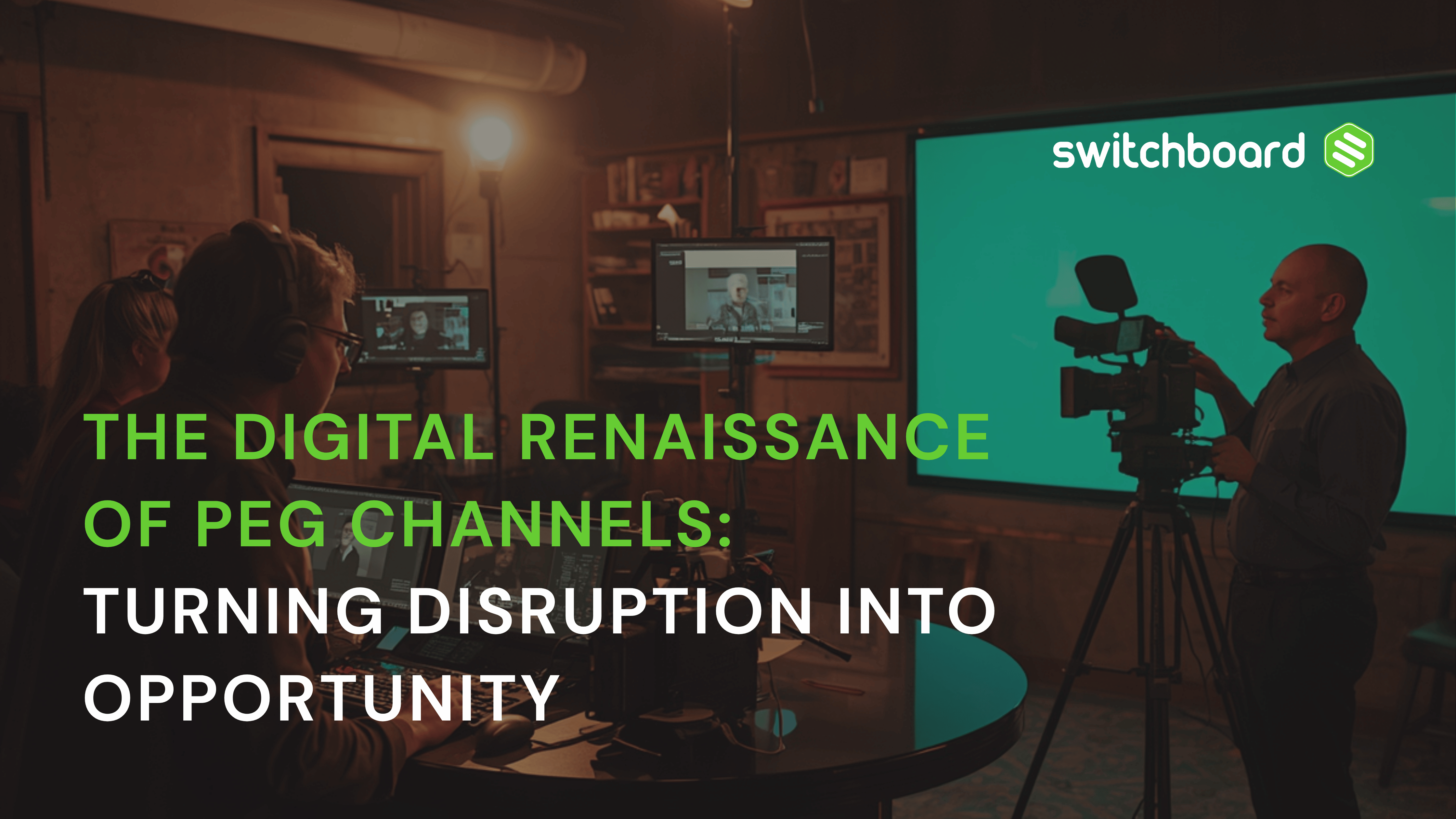
For decades, Public, Educational, and Governmental (PEG) channels have been the quiet backbone of civic communication. Funded primarily by traditional cable franchise fees, these stations have served as the localized eyes and ears of municipalities across the country.
The rise of digital technology and widespread cord-cutting have put real pressure on that model. Franchise fee revenue is shrinking, and a growing share of the population simply doesn't watch cable anymore.
Forward-thinking municipalities identify this situation as a mandate to innovate instead of a crisis scenario. Online digital distribution isn't the replacement of the PEG channel; it's the expansion of it. Modernizing distribution means reaching more residents, fulfilling the civic mission more completely, and building financial sustainability for the long term.
PEG Stations Are Essential Public Infrastructure
The intrinsic value of PEG operations was tested and proven during the 2020 public health crisis. As localized print journalism contracted and broadband gaps persisted in exurban areas, PEG channels stepped up as reliable communication hubs, streaming emergency municipal meetings, disseminating critical public health data, and maintaining a consistent local voice when other systems failed.
The Center for Media & Social Impact (CMSI) documented exactly this: PEG staffers found themselves at the center of local crisis communications, functioning as the virtual town squares their communities needed. The lesson isn't specific to a pandemic. As the media landscape continues to fragment, citizens need a reliable, localized source of truth—a position PEG stations are structurally positioned to provide, provided they can reach their audience.
Modernizing Distribution: Meeting Residents Where They Are
Migrating PEG content to digital streaming platforms doesn't change the civic mission; it extends the reach. Younger demographics, mobile-first users, and households that have fully abandoned cable can still participate in local government when their municipality broadcasts across social platforms and the web.
Digital streaming also unlocks engagement modes that traditional broadcast simply can't offer. Comment sections, live polling, and real-time social sharing turn passive viewers into active participants. When a resident shares a city council stream to their Facebook feed, the PEG channel's reach extends organically—peer-to-peer distribution, at zero additional cost. That kind of distributed reach reinforces transparency and community trust in ways a cable broadcast never could.
A broader digital audience also creates new financial footholds. Digital sponsorships, localized pre-roll advertising, and partnership opportunities become viable when the viewership base grows beyond cable subscribers. These revenue streams won't fully replace franchise fee income overnight, but they create a path toward long-term sustainability.
Case Study: How Louisville's Metro TV Expanded Its Reach
Metro TV, Louisville's government broadcast channel, serves over 800,000 residents with local programming, emergency coverage, and community events. Before modernizing their distribution stack, the team dealt with persistent streaming disruptions, platform unreliability, and inconsistent quality, problems that directly limited what they could cover and who they could reach.
After adopting Switchboard Live, Metro TV's team was up and running with minimal ramp-up time, and the results have been tangible across every part of their operation.
Outcomes since implementing Switchboard Live
- Expanded local programming. Metro TV now streams government events across all 26 local districts, extending the reach of cultural and educational programming to residents who previously had limited access.
- High-profile event coverage. Platform reliability opened the door to broadcasts the team had previously been forced to decline. This year, Metro TV is covering the Kentucky Derby Festival and its lead-up events.
- Emergency reliability. Metro TV uses Switchboard for critical emergency livestreams, including historic snow and flooding press conferences, with no interruptions to public safety updates.
- Sustained audience trust. Streaming simultaneously across major social platforms and Louisville's Metro Government website built audience confidence and drove higher, more consistent engagement over time.
"Our issue prior was reliability and consistency — now we have that. We feel confident that we will be able to stream a reliable feed throughout the entire event, where before, we never had that confidence level. Switchboard has helped us achieve that." — Gary White, General Manager, Metro TV
Your PEG station doesn't need a replacement; it needs a bigger footprint. Switchboard Live helps municipal broadcast teams stream reliably across every platform, with the simplicity a lean team can actually operate. See how it works.
Frequently Asked Questions
Why are PEG channels still relevant in the digital age?
PEG channels are one of the only media infrastructure assets that exist specifically to serve local civic communication. During emergencies—severe weather, public health crises, local government decisions—they provide uninterrupted, hyper-local coverage that national media and social platforms can't replicate. That value doesn't diminish in the digital age; it becomes more critical as the rest of the media landscape fragments.
Will streaming online reduce our traditional cable audience?
Digital streaming captures the portion of your community that has already left cable—it doesn't pull people away from it. Multichannel broadcasting expands total reach rather than splitting an existing audience. The residents you couldn't reach before are now accessible.
How does digital distribution help PEG stations financially?
A larger, engaged online audience creates inventory for digital sponsorships, local advertising partnerships, and grants eligibility that cable reach alone doesn't support. These aren't replacements for franchise fee revenue, but they represent real paths toward financial resilience as the cable model continues to shift.
Can a small PEG team actually manage multichannel streaming?
Yes. Louisville's Metro TV manages full multichannel distribution with a six-person team, including staff without technical backgrounds. The right platform handles the complexity; the team focuses on the content.
.png)